
Oxygen Not Included Polluted Water: Clean It and Reuse
Manage Oxygen Not Included polluted water with a Water Sieve, reuse bathroom wastewater, control polluted oxygen, and remove germs for safe colony use.
Jump to
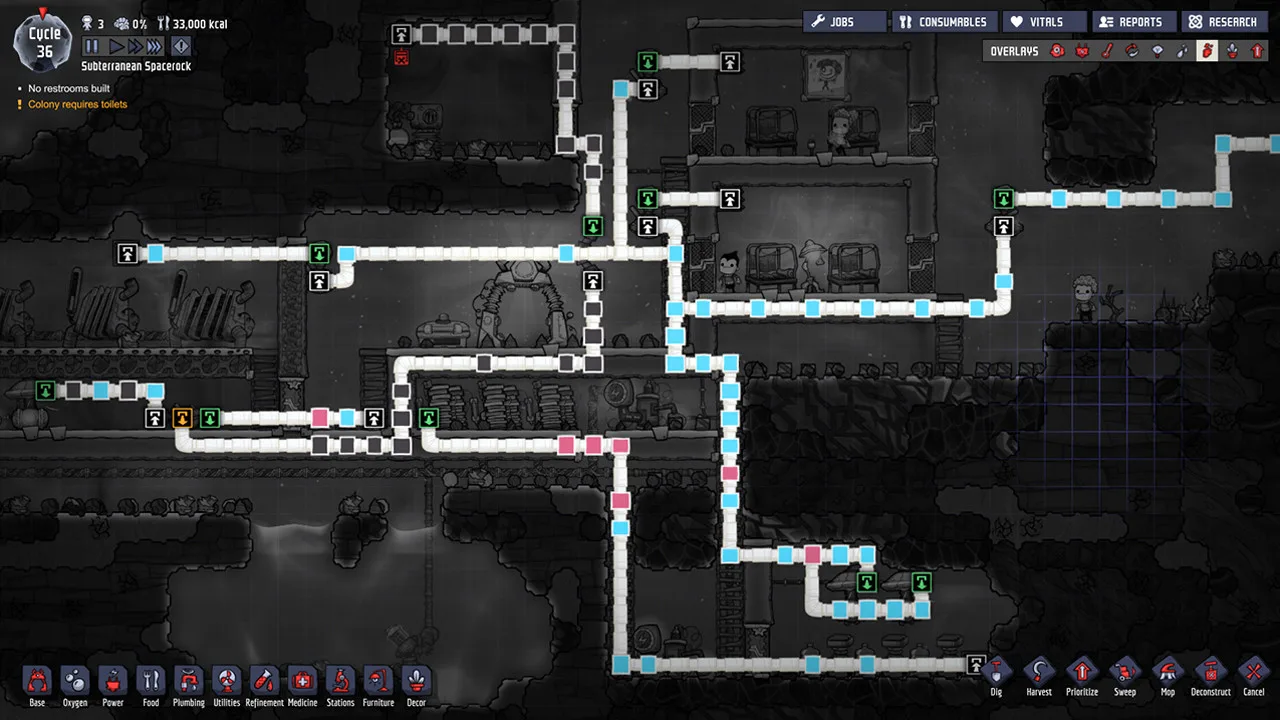
What Should You Do With Polluted Water?
An Oxygen Not Included polluted water buildup can feed Thimble Reeds or become reusable water through a Water Sieve. The sieve removes pollution but leaves germs alive. Route the output according to its use: recycle germy water through toilets and sinks, or send sieved water to an Electrolyzer.
Changing the liquid type and killing germs are separate jobs. Choose the destination before building a treatment system.
| Goal | Process | Germ handling |
|---|---|---|
| Produce normal water | Pump polluted water through a Water Sieve | Germs remain after filtration |
| Supply Thimble Reeds or Arbor Trees | Deliver polluted water directly to the plants | Bathroom wastewater can be used without disinfection |
| Reuse bathroom water | Sieve the wastewater and return normal water to toilets and sinks | Germ removal is unnecessary for this use |
| Remove Food Poisoning germs | Hold liquid in reservoirs surrounded by chlorine | Keep the liquid contained until the germs are gone |
Official page: Oxygen Not Included (klei.com)
How to Clean Polluted Water With a Water Sieve
For an early colony expanding into a slime biome, a Water Sieve turns those green pools into another water supply. You can pump from a natural pool or collect the liquid in a dedicated tank.

Build the plumbing in this order:
- Unlock the research equipment. Research Colony Development to access the Super Computer.
- Research Distillation. This unlocks the Water Sieve.
- Place a Liquid Pump in the polluted water.
- Connect the pump to the sieve’s white input port.
- Connect the green output port to your destination. Send the resulting water to storage or a building that accepts it.
- Add a way to stop the flow. A manual switch lets you shut down the system before an open receiving tank overfills.
Check the plumbing overlay before letting the system run unattended. Follow the route from the pump through the white input and out through the green output.
Keep germy filtered water separate from your food-water supply. Its appearance changes after sieving, but the germ count does not disappear with the green color.
Reuse Bathroom Wastewater Without Disinfecting It
Germy water can supply toilets and sinks. That makes bathroom recycling useful even when you have no chlorine room or temperature treatment system.

Route bathroom output through a Water Sieve, then return the resulting water to the bathroom inputs. Include an outlet for excess liquid: lavatories produce surplus polluted water, so the system needs somewhere for that extra output to go.
Send surplus polluted water to Thimble Reeds or Arbor Trees. Alternatively, sieve it into normal water for an Electrolyzer; Food Poisoning germs do not require disinfection for that use.
Keep these destinations distinct:
- Toilets and sinks: accept normal water that still contains germs.
- Thimble Reeds and Arbor Trees: can consume germy polluted water directly.
- Electrolyzers: use normal water, so polluted water must pass through a sieve first.
Choose an outlet your colony can keep using. A bathroom loop still needs somewhere to discharge its surplus even when its recycled supply is sufficient.
How to Remove Food Poisoning Germs
Disinfect water when its destination calls for it. Chlorine, heating, cooling, and—in Spaced Out!—radiation offer different ways to reduce the germ count.

Hold Liquid in Reservoirs Surrounded by Chlorine
Build Liquid Reservoirs inside a chlorine-filled room and pipe the contaminated liquid into them. Chlorine above an open pool does not disinfect the pool in the same way.
The important part is holding the liquid long enough before releasing it:
- Keep the reservoir surrounded by chlorine.
- Use a liquid lock or suitable containment layout to retain the gas.
- Prevent carbon dioxide from collecting around the reservoirs; it settles below chlorine.
- Check that the germs are gone before opening the discharge route.
Do not assume that continuous flow through a chlorine room guarantees germ-free output. Control when the stored water can leave, and keep untreated arrivals from being immediately discharged.
Heat the Water
Food Poisoning germs begin declining above 40°C. A Liquid Tepidizer controlled by a temperature sensor set to activate below 45°C provides a straightforward heating setup.
Allow time for the germ count to fall, then check the liquid before releasing it. Heating creates another job if the destination needs cooler water, so account for that before treating your entire supply.
Cool Polluted Water Below Freezing
Cooling below 0°C kills Food Poisoning germs, but normal water freezes at those temperatures. Polluted water remains liquid until roughly −20°C, giving you more room to cool it without freezing the supply.
A Thermo Aquatuner cooling loop can handle this process. Watch the temperature throughout the pipe route, and warm the liquid afterward if its destination requires it.
Use Radiation in Spaced Out!
With Spaced Out! enabled, radiation can kill germs in stored water. Space exposure and Wheezeworts provide options for a treatment tank.
Position a Wheezewort above the tank to expose the water beneath it. Allow the germ count to decline before releasing the liquid, and keep checking the contents rather than relying on a fixed waiting period.
Control Polluted Oxygen Around Storage
Polluted water can release polluted oxygen. Place Deodorizers near the storage area and along nearby routes your Duplicants frequently use.
Deodorizers convert polluted oxygen into normal oxygen. This also makes the atmosphere less hospitable to Slimelung, which dies off in normal oxygen.
Keep air treatment separate from liquid treatment in your planning. A Deodorizer handles polluted oxygen; it does not replace a Water Sieve or disinfect the water beneath it.
Use the New Plumbing Tools to Find Blockages
The November 19, 2026 Quality of Life Update adds useful tools for inspecting water systems.
| Change | How it helps with wastewater |
|---|---|
| Pipe Flow sub-overlay | Shows animated flow direction and blockage locations |
| Pipe damage status explanations | Identifies damage caused by liquid changing state |
| Lavatory “Output Pipe Full” tooltip | Reminds you that each visit produces excess polluted water |
| Corrected Polluted Water off-gas database entry | Displays the corrected off-gas mass ratio |
When a bathroom stops working, open the Plumbing overlay and inspect Pipe Flow. Trace the output toward its destination, then check whether the receiving pipe or storage has filled. If you are disinfecting through cooling, inspect damaged sections for a phase-change warning before restarting the loop.
Continue with
 Oxygen Not Included How to Store Water: Tank GuideOxygen Not Included how to store water: build liquid tanks, use 5-ton reservoirs, prevent pressure damage, and explore infinite storage before sealing up.
More in Water
Oxygen Not Included Infinite Liquid Storage: 3 Builds
Build Oxygen Not Included infinite liquid storage with vent displacement, Escher waterfalls, or door compression. Learn how to contain pressure safely.
Oxygen Not Included Pipe Blocked for No Reason: Fixes
Oxygen Not Included pipe blocked for no reason? Fix water flow by checking bridge direction, full cooling loops, bathroom overflow, and shutoff automation.
Continue exploring

Oxygen Not Included Beginner Guide: Survive and Grow
Use this Oxygen Not Included beginner guide to choose duplicants, build bathrooms, manage oxygen and food, and keep your colony growing without a crisis.
Oxygen Not Included Beginner Natural Gas Station Guide
Oxygen Not Included beginner natural gas station guide: connect fuel storage, automate generators, handle exhaust, and keep heat away from your crops.
Join the community
Official channels for news, updates and player help: