
Oxygen Not Included Hydra: Build and Startup Guide
Build an Oxygen Not Included hydra with reliable gas separation, pressure controls, and cooling. Learn water requirements and fix common startup problems.
Jump to
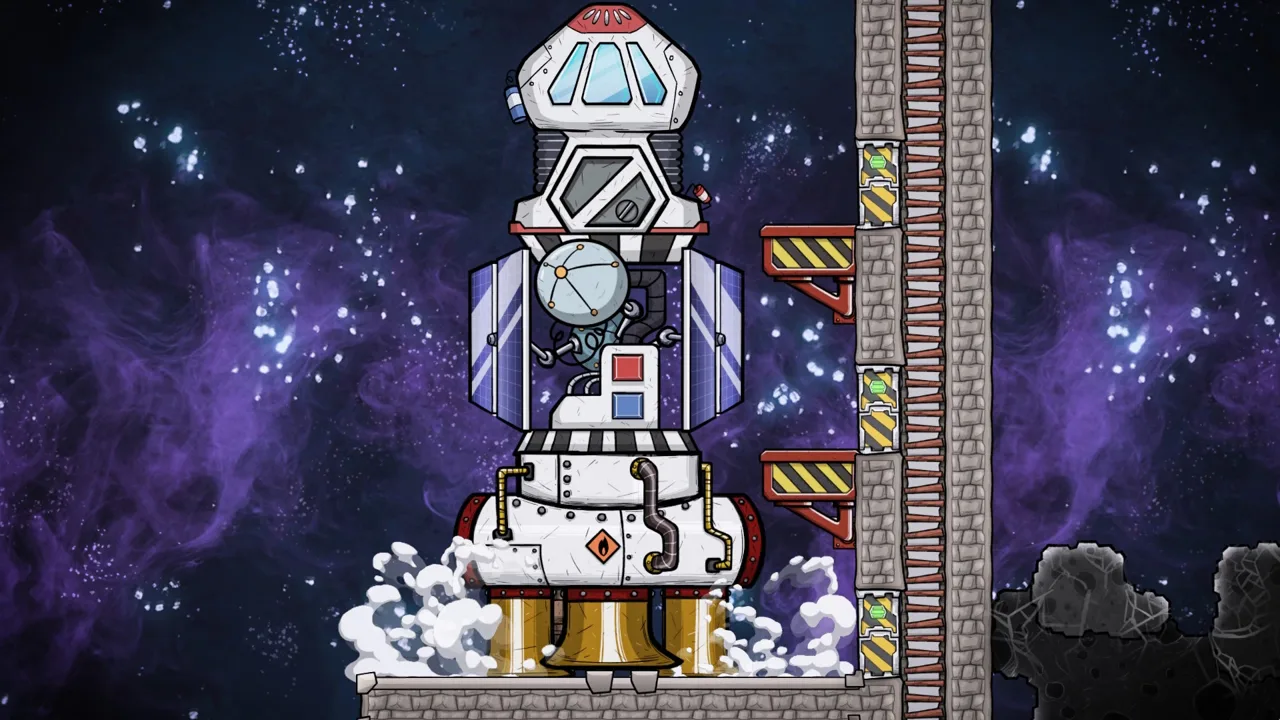
What Is a Hydra, and How Does It Work?
An Oxygen Not Included hydra is an electrolyzer setup that uses two liquid layers to bypass normal gas overpressure shutdowns and direct oxygen and hydrogen into separate chambers. With correct priming, it can maintain full production while storing gas inside those chambers, giving your colony a compact oxygen supply.
A Hydra becomes a self-powered oxygen machine, or SPOM, when its hydrogen generators supply the electricity needed to operate it. The liquid arrangement handles gas separation and pressure behavior; the generator circuit handles power.
Here are the production numbers that determine the build’s size:
| Resource or capacity | One electrolyzer | Two electrolyzers |
|---|---|---|
| Water consumed at full operation | 1 kg/s | 2 kg/s |
| Oxygen produced | 888 g/s | 1,776 g/s |
| Hydrogen produced | 112 g/s | 224 g/s |
| Standard Duplicants supported at 100 g/s each | 8, with surplus oxygen | 17, with surplus oxygen |
The build does not increase oxygen yield per kilogram of water. Its advantage is keeping electrolyzers operating without their normal overpressure interruptions and retaining production when gas delivery backs up.
Why the Liquid Layers Matter
An electrolyzer normally stops when gas pressure at its output reaches 2 kg. In a Hydra, liquid occupies the output cell, and newly produced gas moves into neighboring cells.
Because different elements cannot share one cell, the surrounding liquid and existing gas determine where each output goes. Priming one chamber with oxygen and the other with hydrogen gives those gases their intended destinations.
Two different liquids maintain separate layers across the electrolyzer’s height. Adding too much liquid floods the building and stops production, so liquid coverage and flooding are different conditions.
Official page: Oxygen Not Included (klei.com)
Size the Pumps and Pipes Before Building
A two-electrolyzer Hydra produces enough oxygen for 17 standard Duplicants, assuming each consumes 100 g/s. Include other oxygen demands when choosing its capacity, and account for traits such as Mouth Breather.
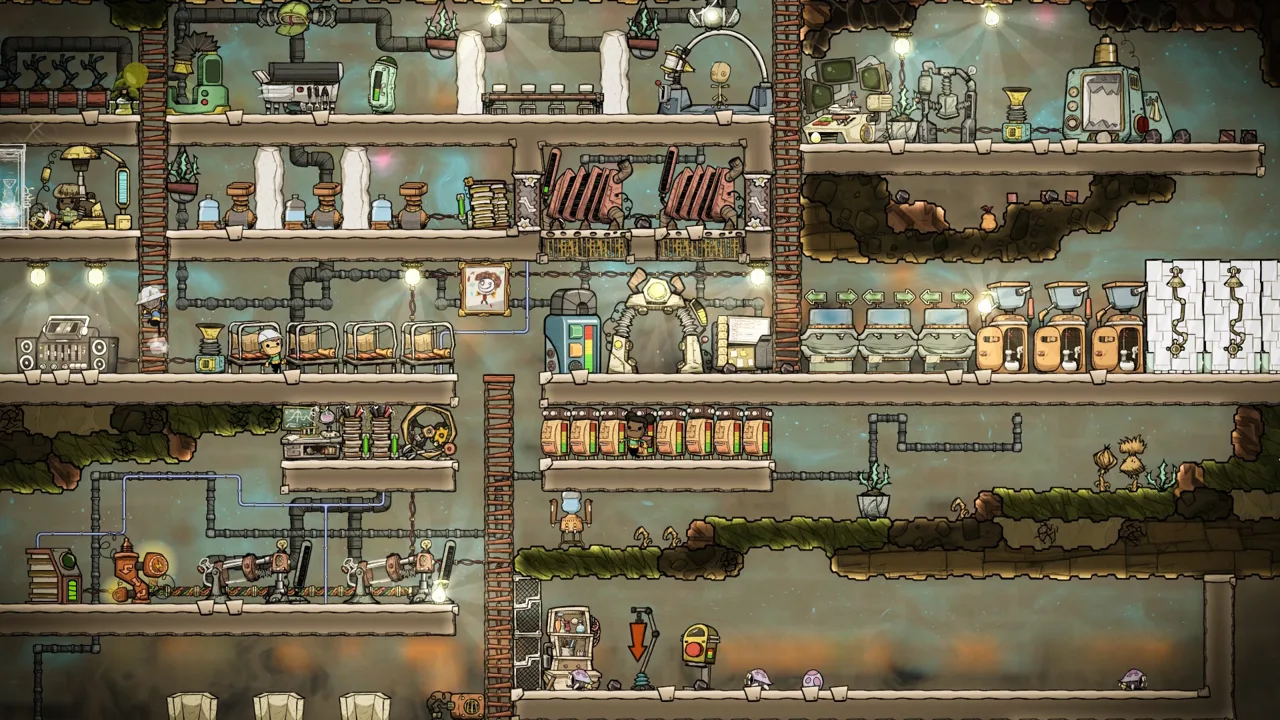 Image: Steam / Klei Entertainment
For full output, plan around these transport limits:
- A gas pump moves up to 500 g/s.
- A gas pipe carries up to 1,000 g/s.
- A liquid pipe carries up to 10 kg/s.
Two electrolyzers therefore need four oxygen pumps to export their full 1,776 g/s production. Route those pumps into two oxygen lines; combining everything into one pipe limits delivery even while oxygen continues accumulating inside the chamber.
One hydrogen pump can handle the pair’s 224 g/s output. That gives this configuration five gas pumps total.
A single full liquid line can feed up to 10 electrolyzers, but available water matters more than pipe capacity. Check that your water supply can sustain the machine’s intended operating rate before expanding it.
Hydra Versus a Conventional SPOM
A conventional SPOM separates gases without the same liquid-covered output arrangement. It is easier to assemble and bring online, making it a practical introduction to electrolyzer oxygen production.
Choose a Hydra when you want compact gas storage and sustained electrolyzer operation, and are comfortable managing liquid placement and chamber priming. Keep a working conventional SPOM if it already supplies your colony reliably; additional production capacity only helps when you have a use for it.
Assemble the Chambers and Liquid Layers
A compact two-electrolyzer configuration can fit within a 12-tile-wide by 12-tile-tall area, including its power equipment. The exact airflow-tile arrangement matters: chamber walls must leave each electrolyzer’s output connected to the intended gas destinations while keeping the liquids contained.
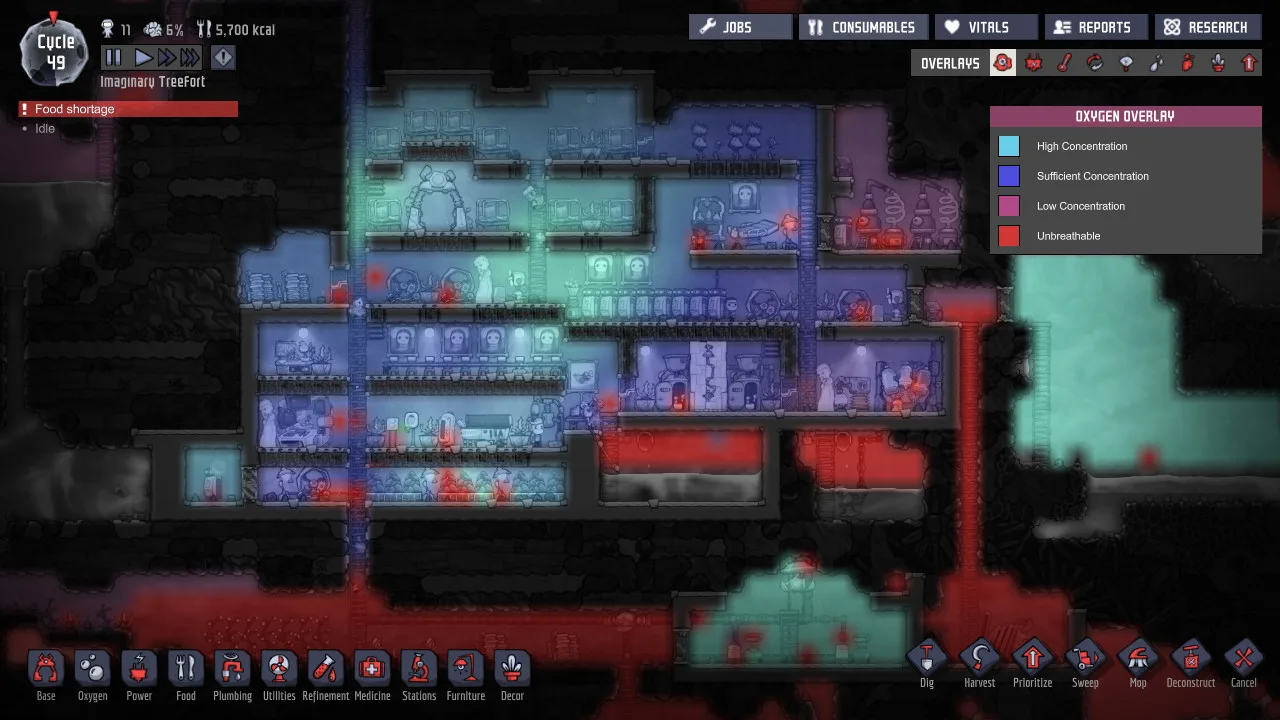 Image: Steam / Klei Entertainment
Build from the bottom up so Duplicants retain access to unfinished equipment.
- Construct the lower enclosure and electrolyzer. Use insulated outer walls to reduce heat leaking into neighboring rooms.
- Install internal equipment before closing access. Finish pumps, water pipes, gas pipes, conductive wire, and automation.
- Place the liquid layers. Keep two different liquids across the electrolyzer’s lower and upper cells.
- Check the building status. The cells should contain liquid without the electrolyzer displaying a Flooded shutdown.
- Complete the next electrolyzer layer. Repeat the liquid placement, then finish the enclosure after removing construction debris and unnecessary access structures.
Use gold amalgam for electrolyzers and gas pumps in a hot enclosure. Operating temperatures can reach around 75°C, making ordinary copper equipment vulnerable to overheating.
Delivering Measured Amounts of Liquid
One placement method uses 10 kg of crude oil and 10 kg of petroleum for an electrolyzer:
- Fill a liquid pipe segment with the intended liquid.
- Deconstruct that filled segment to release its contents.
- Repeat with the second liquid to establish the other layer.
A full liquid pipe segment contains 10 kg. Give the temporary pipe a valid destination, such as a bridge input, so the liquid actually flows into position before deconstruction.
Another configuration uses polluted water below regular water, with approximately 100 kg per cell across each layer. Those amounts belong to that arrangement; do not combine its liquid quantities with a different chamber shape.
Bottle emptiers also work, but deliveries require attention. Disable auto-bottling after the intended delivery, and inspect the resulting cell masses before sealing the electrolyzer.
Keep optional flooded gas vents separate from the electrolyzer liquid setup. In the pressure-controlled configuration, those vents use less than 2 kg of liquid in each vent cell. They serve external gas injection and are unnecessary if you only need ordinary vents for initial priming.
Prime Both Gas Chambers Before Startup
Vacuum alone does not assign a chamber to a particular gas. Starting an unprimed Hydra can send both outputs toward the same side and leave the other chamber empty.
 Image: Steam / Klei Entertainment
Prime the chambers before admitting water to the electrolyzers:
- Keep the electrolyzers disabled. Use an automation switch or leave their water disconnected.
- Supply temporary electricity. Manual generators or an existing power circuit can run the pumps.
- Evacuate both chambers. Open the Materials Overlay, select Gas, and inspect the cells until they show vacuum.
- Stop the evacuation pumps. Prevent them from immediately removing your priming gas.
- Add oxygen to its chamber and hydrogen to its chamber. For the pressure-controlled setup, establish roughly 1–2 kg of pressure in each.
- Enable production and inspect gas separation. Keep startup gas away from hydrogen generators until the hydrogen line is clean.
Gas destinations depend on the layout and priming. Hydrogen does not have a universal left-side assignment: one configuration places oxygen left and hydrogen right, while another reverses them.
Save before the initial startup so you can restore the chamber state if liquid placement or gas separation needs adjustment.
Add Pressure Controls and Protect the Prime
A Hydra can continue adding gas beyond normal electrolyzer pressure limits. Add automation if you want production to pause once the chambers contain a useful reserve.
The pressure-controlled setup uses these settings:
| Control | Setting | Function |
|---|---|---|
| Oxygen export pump sensor | Above 5,000 g | Runs oxygen pumps while a reserve remains |
| Hydrogen export pump sensor | Above 5,000 g | Runs the hydrogen pump while a reserve remains |
| Each chamber’s upper-pressure sensor | Above 20,000 g | Signals that the chamber has reached its production limit |
| Pump buffer gates | 5 seconds | Keeps pumps running briefly after their sensor turns red |
| Smart battery | High 95% | Controls hydrogen generators |
For electrolyzer control, pass each upper-pressure sensor through a NOT gate, then combine those outputs with an AND gate. Both chambers must be below their upper limits for production to run.
If you install external gas-injection vents, control each vent with its own chamber’s upper-pressure signal. Inject only oxygen into the oxygen chamber and hydrogen into the hydrogen chamber.
The 5-second pump buffers reduce frequent switching, but they also let pumps continue drawing gas after pressure falls below 5 kg. Watch chamber pressure during commissioning rather than treating 5 kg as an exact stopping point.
Unlimited Storage and Water Throttling
In this automation arrangement, setting the upper-pressure sensors to Below 0 g keeps their NOT-gate outputs green, removing the pressure-based production cutoff.
That enables unlimited gas storage through the liquid-covered output mechanic. Water consumption continues even if the colony stops taking oxygen.
Use a liquid valve to limit production:
Water flow in g/s = desired oxygen production in g/s × 1,000 ÷ 888
For example, feeding 1,000 g/s of water produces 888 g/s of oxygen; feeding 2,000 g/s produces 1,776 g/s. Remember to let a Duplicant apply the valve setting.
Bring the Hydrogen Power Circuit Online
For the two-electrolyzer configuration, install two hydrogen generators and a smart battery. Connect the battery’s automation output to the generators, using a 95% high threshold.
Keep temporary power connected until:
- Gas separation is stable.
- The hydrogen pump can operate under its pressure settings.
- Hydrogen reaches the generators.
- The generators are charging the battery.
Reserve hydrogen in the generator supply pipe. A pressure-limited Hydra can stop producing when its oxygen chamber fills, while battery charge continues to drain slowly. Stored hydrogen helps the machine restart after that idle period.
Disconnect temporary startup power only after the machine sustains itself. Budget separately for equipment outside the core build, including oxygen cooling and external water delivery.
Cool the Oxygen Before It Reaches Your Base
The enclosure and outgoing oxygen can become hot enough to threaten temperature-sensitive crops. Insulated walls contain heat; they do not remove it.
Route oxygen through radiant gas pipes submerged in a substantial pool of water for an initial cooling stage. The pool absorbs heat, so watch its temperature as operation continues.
For sustained active cooling, run a cooled liquid loop through the gas chamber or a separate heat-exchange area. A Thermo Aquatuner and Steam Turbine setup can support that loop.
Keep the cooling system accessible. Pumps, electrolyzers, and generators inside a sealed enclosure are awkward to repair once the chambers hold large gas reserves.
Fix Startup and Delivery Problems
The Electrolyzer Says Overpressure
Inspect the liquid at the output cell and the neighboring gas cells. An incorrect liquid arrangement or oxygen blocking the intended hydrogen route can interrupt operation.
Disable the electrolyzers, clear the affected chamber, and restore the correct priming gas before restarting. Continuing production while trying to remove contamination makes the cleanup harder.
The Electrolyzer Says Flooded
Check the liquid masses and layer positions. Remove excess liquid and restore the two-layer arrangement before enabling the building again.
Oxygen Production Is Running, but the Base Is Starving
Check the delivery system before adding electrolyzers. Four oxygen pumps cannot push their combined output through one 1,000 g/s pipe.
Inspect downstream vents, cooling routes, and pipe connections. Stored oxygen inside the Hydra does not help Duplicants until it reaches their breathing space.
The November 19, 2026 Quality of Life Update added pipe tools useful for tracing these problems:
| Pipe tool or status | What it helps you find |
|---|---|
| Pipe Contents and Pipe Flow sub-overlays | Flow direction and blockage locations |
| “Pipe Network Requires Building Intake” status | A pipe network missing the intake needed for flow |
The Hydrogen Generator Receives Oxygen
Stop the contaminated supply before resuming generation. Disable the electrolyzers while clearing unwanted gas, then re-prime the hydrogen chamber and inspect its output pipe.
If the build accepts gas from elsewhere, inspect those inputs too. An external connection carrying the wrong gas can disrupt an otherwise stable Hydra.
Continue with
 Oxygen Not Included Best Way to Make Oxygen: SPOM GuideOxygen Not Included best way to make oxygen: compare diffusers and electrolyzers, build a SPOM, and manage water, heat, and airflow to keep colonies alive.
Continue exploring
Oxygen Not Included Mods: Essential QoL Picks for 2026
Find Oxygen Not Included mods for clearer overlays, faster planning, and better colony control, plus what to reconsider after the November 2026 QoL update.
Oxygen Not Included Beginner Guide: Survive and Grow
Use this Oxygen Not Included beginner guide to choose duplicants, build bathrooms, manage oxygen and food, and keep your colony growing without a crisis.
Join the community
Official channels for news, updates and player help: